Statute
AsksIs this week’s move already spent?
Measures the weekly and monthly move against their historical range allowances.
What it measures and how
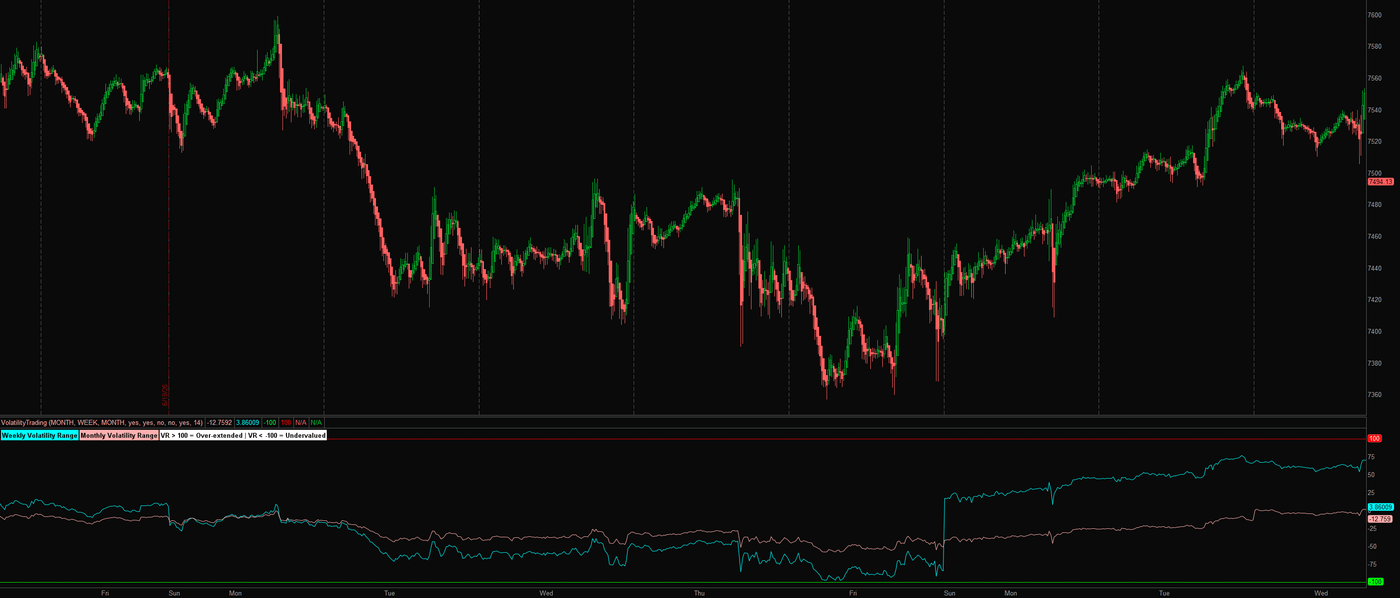
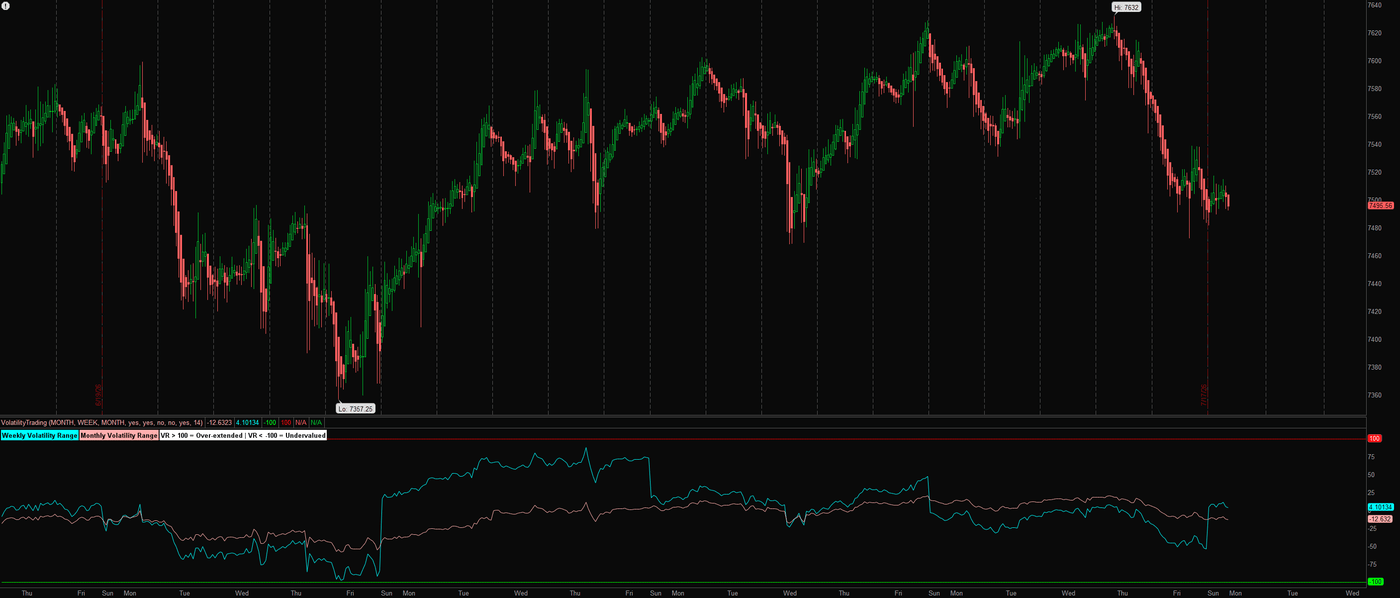
Every move spends part of a range budget. Statute compares price with the current period's open using a smoothed true-range allowance derived from prior-period data. The default weekly and monthly lines put two clocks on the same scale, with plus and minus 100 marking one allowance above and below the open.
Get started
- Install the complete thinkScript in thinkorswim desktop through Charts → Studies → Edit Studies → Create, then apply it to a chart below the selected higher-timeframe aggregations.
- Begin with the default weekly and monthly periods so the W and M status labels match the selected clocks.
- Read cyan for the fast period and pink for the slow period. Compare each line with the plus and minus 100 rails.
- Use the optional inner rails and period separators if you want earlier visual context and clearer calendar boundaries.
How to read it
A common scaleZero corresponds to the current period's open. A reading of plus 100 is one modeled true-range allowance above that open; minus 100 is one allowance below it.
Two clocks, different questionsA weekly breach with a monthly line still inside its rails shows that the shorter-period move is more stretched against its own allowance. The lines can disagree because their reference opens and range histories differ.
A breach enters the recordShading marks readings beyond a rail. Optional inner rails provide a visual approach zone, while alerts mark the first crossing beyond the outer limits.
Know the limits
The allowance is a volatility reference, not a maximum move or a fair-value estimate. Price can continue beyond either rail.
The allowance uses the selected higher-timeframe data. Changing those aggregations, smoothing settings or available history changes the allowance. The current price position can still change while the chart bar forms.
The status label and alert wording remain weekly/monthly if you change the period inputs. Use the defaults if you want those labels to match literally.
Open source, no email wall. Read the code, test it on your own chart, and keep it. Explore all 20 free tools.
Keep the tool.
Add a second read.
Statute compares the move with weekly and monthly range allowances. Keep that focused view.
The paid MIZAN engine runs on TradingView. It adds the market read, the score and explained blocked setups for the candidates it detects. Reversal setups that pass get entry, stop and target references.
MIZAN is a separate engine, not a bundle of these free tools. Compare its read with your own method.
See passed setups, blocked setups and losses →
7-day trial starts at checkout · From $79.99/month afterward · Cancel through Whop · Manual access within six hours after checkout and receipt of your correct TradingView username